Understanding the Proffer Session Before You Walk Into a Federal Prosecutor’s Office
Key Takeaways: A "Queen for a Day" proffer agreement is a written contract with federal prosecutors that generally lets a person under investigation speak candidly while typically barring only the direct use of those statements in the government’s case-in-chief. It is not immunity, not a plea deal, and not a promise of leniency. Standard letters, including those used in the Northern District of Illinois, typically reserve the government’s right to use statements for impeachment, rebuttal, and to develop investigative leads, making derivative use a real and often underestimated risk. Formal statutory immunity under 18 U.S.C. §§ 6002, 6003 generally offers materially broader protection than these informal letters. Untruthful or incomplete answers may void the agreement entirely and could create new exposure under 18 U.S.C. § 1001. Whether to proffer, decline, or seek an attorney proffer first is a fact-dependent judgment best made with trial-ready federal defense counsel.
A "Queen for a Day" letter is the colloquial name for a written agreement between a federal prosecutor and a person under investigation that generally permits candid speech during a proffer session, with a limited promise that the statements will not be used directly against them in the government’s case-in-chief. The term is generally another name for a standard proffer agreement. The protection is narrower than most assume: it is not immunity, not a plea deal, and generally does not stop the government from building a case with what it learns.
If you have received a target letter, a grand jury subpoena, or a call from an AUSA suggesting a "sit-down," the decision you make next may shape the rest of the case. Leonard Trial Lawyers offers free consultations to individuals and businesses facing federal exposure. Call 312-380-6559 or contact us now to discuss your situation with Leonard Trial Lawyers before you speak with the government.
What a Queen for a Day Proffer Agreement Actually Promises
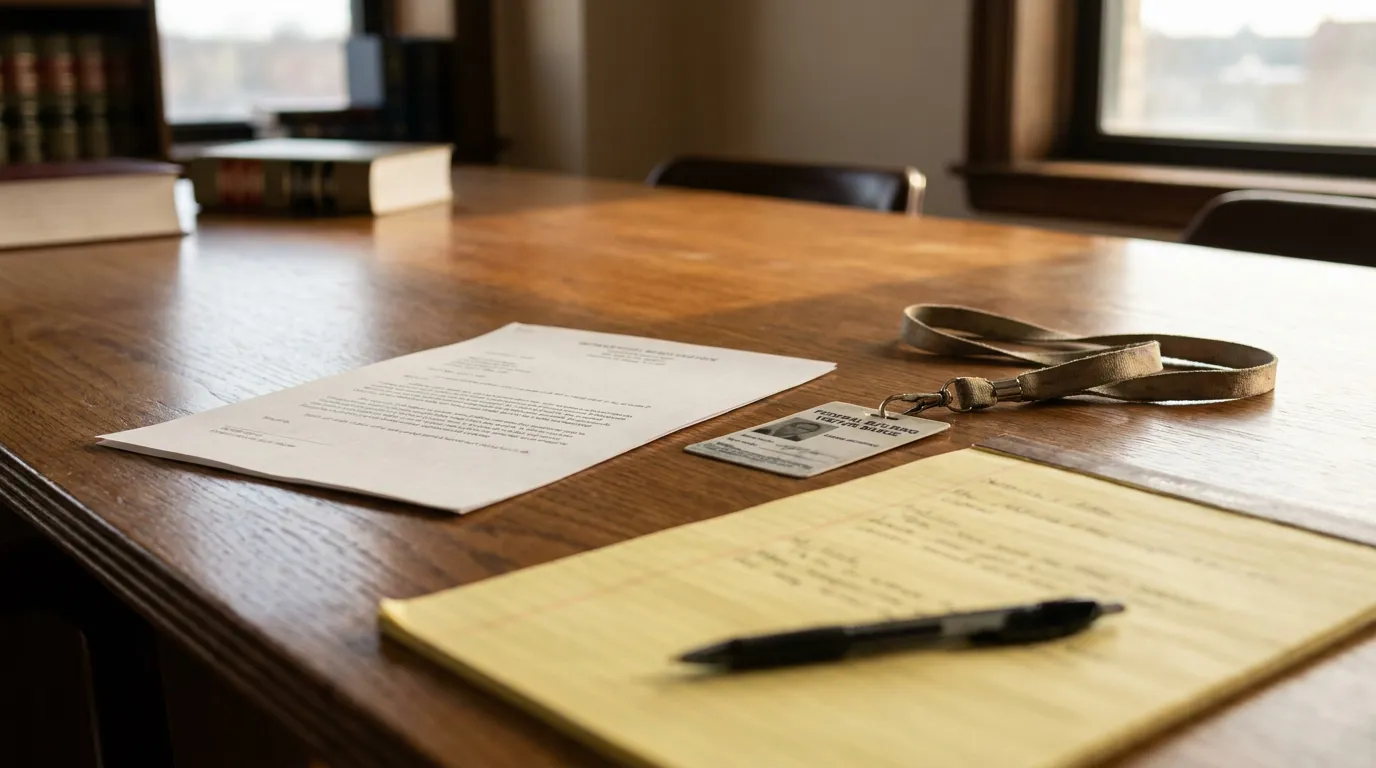
The core promise in a standard federal proffer letter is typically narrow, conditional, and written by the government. Letters issued by United States Attorney’s Offices, including templates used in the Northern District of Illinois, generally state that statements made during the session will not be offered in the prosecution’s case-in-chief, while expressly reserving the right to use those statements for impeachment, rebuttal, and to derive leads for further investigation. Terms vary by office and case, which is why counsel in Chicago, Rockford, Springfield, and East St. Louis generally negotiate against a similar baseline while reading each letter on its own terms.
Read the exceptions before you read the promise. The most consequential language in a federal proffer agreement is often not the protective clause but the waiver clauses that follow it. Under many versions, if the defense later advances a factual position inconsistent with the proffer, the government may seek to introduce the proffer statements to rebut it. Courts have generally enforced such waivers as written, and in practice they can quietly narrow the defense theories available months or years later.
Direct Use Versus Derivative Use
The distinction between direct use and derivative use is where many clients are surprised. A proffer agreement typically bars only direct use of the words spoken in the room, and only in the government’s case-in-chief. It generally does not bar the government from following the roadmap those words provide, locating witnesses, subpoenaing records, or corroborating accounts independently, and then charging the case with that derivative evidence.
This can be materially different from formal statutory immunity. Under 18 U.S.C. §§ 6002, 6003, a court-ordered grant of use and derivative-use immunity compels testimony over a valid Fifth Amendment objection and generally bars the government from using both the compelled statements and anything derived from them in a later prosecution, subject to the government’s burden under Kastigar v. United States, 406 U.S. 441 (1972), to prove wholly independent sources. Such immunity does not bar prosecution for perjury or false statements made while testifying, and does not confer transactional immunity against charges proved by independent evidence. DOJ policy distinguishes informal "letter immunity" from formal immunity orders, and the informal version generally offers meaningfully less protection.
| Feature | Proffer / "Queen for a Day" Letter | Formal Immunity, 18 U.S.C. § 6002 |
|---|---|---|
| Source of authority | Contract with the U.S. Attorney’s Office | Court order on government application |
| Direct use barred | Generally yes, in case-in-chief | Generally yes |
| Derivative use barred | Generally no | Generally yes, subject to Kastigar |
| Impeachment use | Commonly permitted | Generally restricted, except for perjury or false statements |
| Guarantee of no charges | No | No, charges may still be brought on independent evidence |
Why the Northern District of Illinois Context Matters
Federal proffer practice in Illinois generally operates inside a defined policy framework rather than on prosecutorial whim. The Justice Manual’s principles of federal prosecution set DOJ-wide standards for charging decisions, plea negotiations, and cooperation, and JM 9-27.001 states the chapter’s purposes include ensuring "the fair and effective exercise of prosecutorial discretion by attorneys for the government." Those principles generally form the backdrop for proffer sessions in the Northern, Central, and Southern Districts of Illinois, though the Justice Manual is internal guidance creating no enforceable rights for defendants.
The U.S. Attorney’s Office for the Northern District of Illinois has also publicized formal frameworks for individual cooperation with federal prosecutors, reflecting an office that structures cooperation deliberately rather than informally. For a person under investigation, the terms offered are institutional, not personal to one AUSA, and departures from the template generally require negotiation and justification.
What Typically Happens in the Room
A proffer session is generally an interview, not a conversation. Agents and an AUSA are usually present, questions are often prepared in advance from records the government already holds, and the session may last several hours across more than one day. Counsel attends and may confer with the client, but counsel does not testify, the client answers.
Common practical realities clients should understand:
- The government generally expects complete truthfulness about all subjects, not only the ones the client wants to discuss.
- A false or materially incomplete statement can void the agreement’s protections entirely and may create new exposure under 18 U.S.C. § 1001.
- Nothing in the letter obligates the government to extend a plea offer, a cooperation agreement, or a motion under U.S.S.G. § 5K1.1.
- Statements may be memorialized in an FBI Form 302 that can surface later in discovery involving co-defendants.
💡 Pro Tip: Ask your attorney for an attorney proffer first. In many cases, counsel can describe what a client would say in hypothetical or third-person terms, testing the government’s interest without the client ever entering the room.
No Immunity, No Plea, No Guarantee
Participation in a proffer session does not guarantee immunity, charging leniency, or a plea agreement. Proffer letters commonly include an express disclaimer to that effect, and courts generally treat these letters as contracts interpreted according to their written terms, with some courts also applying due process considerations given the constitutional rights being waived. A client who walks in expecting a deal, rather than an audition for one, may have misunderstood the instrument.
The decision is fact-dependent and rarely obvious. Whether a proffer serves a client’s interests may depend on the strength of the government’s existing evidence, the client’s relative culpability, the availability of suppression or venue challenges, the posture of co-defendants, and whether the case is genuinely triable. Substantive federal criminal defense Illinois counsel can evaluate these factors before advising a client to speak.
When Declining the Invitation Is the Stronger Position
Sometimes the best answer to a proffer invitation may be a respectful no. The Fifth Amendment privilege against compelled self-incrimination remains available, and a defendant’s decision not to testify generally carries no evidentiary penalty at trial, since the government may not comment on it and the jury may be instructed accordingly. Where the government’s proof is thin, statute of limitations issues are live, or suppression motions under the Fourth Amendment may weaken the case, a proffer could convert a defensible matter into a resolved one.
Trial readiness can change the calculus. Prosecutors may negotiate differently with defense counsel who try cases. Michael Leonard secured a complete not-guilty verdict on all counts in a federal drug conspiracy and possession prosecution in February 2026 in the Hammond division of the Northern District of Indiana, case number 2:23-cr-00045-GSL-JEM, while a co-defendant who pleaded guilty received a 216-month sentence. That contrast illustrates why the proffer decision may be best made from a trial-ready posture, though outcomes always depend on the specific facts of each case and prior results do not predict future outcomes.
Practical Safeguards Worth Negotiating
Proffer letters are templates, and templates are sometimes negotiable. Experienced counsel may seek to narrow impeachment and rebuttal clauses, limit the scope of subjects covered, clarify what happens if negotiations break down, or seek written assurance about whether the session will be shared with other agencies or districts. Not every request succeeds, one office generally cannot bind other districts or agencies absent express agreement, and the government retains substantial leverage, but the asking costs nothing.
Preparation may matter more than the letter’s wording in many cases. Clients should review documents in advance with counsel, understand the government’s likely theory, and never speculate. Additional analysis of federal investigative procedure is available through the firm’s federal criminal defense insights.
💡 Pro Tip: Treat every proffer statement as though it may be read aloud at trial. Even where direct use is barred, the memory of the room and the leads it generated do not disappear.
Frequently Asked Questions
1. Does a Queen for a Day proffer agreement protect me from being charged?
Generally no. The agreement typically limits direct use of your statements in the government’s case-in-chief, subject to exceptions, but generally does not prevent indictment. Prosecutors may charge you using independently obtained or derivative evidence.
2. Can my proffer statements be used against me at sentencing?
Under certain circumstances, yes. Many proffer letters permit the government to use statements to rebut contrary factual positions taken by the defense, including at sentencing. The precise scope depends on the letter’s language and how the sentencing court applies it.
3. Is a Queen for a Day proffer agreement Illinois practice different from other districts?
Federal proffer practice is broadly similar nationwide, and Illinois districts generally follow DOJ-wide policy. Local templates, individual U.S. Attorney’s Office practices, and governing circuit case law can differ in detail, so the specific letter generally controls.
4. What happens if I am not fully truthful during a proffer?
The protections may be voided in their entirety, and false statements to federal agents may constitute a separate offense under 18 U.S.C. § 1001. This is among the most serious risks of the process.
5. Should I attend a proffer without an attorney?
Generally, you should not. Proffer sessions often involve waivers with long-term consequences, and no one should evaluate those terms alone or under time pressure from investigators.
Weighing the Offer With Clear Eyes
A Queen for a Day proffer agreement is generally a limited, contractual arrangement that trades candor for a narrow evidentiary protection, not a grant of immunity and not a promise of leniency. The government typically reserves impeachment rights, derivative-use rights, and broad discretion over charging. For professionals, executives, and business owners facing federal exposure, the decision to proffer should follow a careful assessment of the evidence, the available defenses, and the realistic path to trial. Michael Leonard, named a 2027 Super Lawyer by Super Lawyers in Criminal Defense and White Collar Criminal Defense, brings more than 30 years of high-stakes trial advocacy to that assessment.
Before you accept any invitation to speak with federal agents or prosecutors, get counsel who tries cases. Call Leonard Trial Lawyers at 312-380-6559 or request a free consultation today.
Disclaimer: This content is for informational purposes only and is not legal advice. Every case is unique, and results may vary. Consult an attorney about your specific circumstances.