
Understanding Why Illinois Treats Entry Into a Home So Severely
Key Takeaways: Illinois classifies residential burglary as a Class 1 felony under 720 ILCS 5/19-3 because it protects the dwelling place itself. The State must prove knowing, unauthorized entry into or remaining within another’s dwelling with intent to commit a felony or theft inside, and that intent must exist at the time of entry or unlawful remaining. Conviction generally carries 4 to 15 years in prison with mandatory supervised release, or 15 to 30 years when aggravating factors apply, plus possible fines and restitution. Probation is generally unavailable because residential burglary is excluded from probation eligibility. Challenges to the structure’s status, identification, intent, and unlawfully obtained evidence often shape the outcome. Leonard Trial Lawyers defends these high-stakes cases and offers a free consultation at 312-380-6559.
Illinois classifies residential burglary as a Class 1 felony because the legislature drew a hard line around the home. Under 720 ILCS 5/19-3, a person commits residential burglary by knowingly and without authority entering, or remaining within, the dwelling place of another with intent to commit a felony or theft therein. That single element, the dwelling place, separates this charge from ordinary burglary and places it in the most serious felony category other than Class X and first degree murder. The consequence is severe: conviction generally carries a determinate prison term rather than county jail time, and probation is generally unavailable.
If you or someone close to you is facing this charge, the classification alone should tell you how much is at stake. Leonard Trial Lawyers brings more than 30 years of courtroom experience to high-stakes state and federal matters. Call 312-380-6559 or contact us now to schedule a free consultation.
What the Residential Burglary Statute Actually Requires
The State must prove far more than the fact that someone was inside a home. Under the Illinois residential burglary statute, the prosecution must establish knowing entry or knowing unauthorized remaining, lack of authority, a structure qualifying as a dwelling place of another, and intent to commit a felony or theft inside. Conduct involving a dwelling that would otherwise be charged as burglary under 720 ILCS 5/19-1 is prosecuted under the residential burglary provision.
Intent is the element that most often decides these cases. Illinois law requires proof of criminal intent at the time of unauthorized entry or unlawful remaining, not proof that any theft or felony was completed. Because intent is rarely captured directly, prosecutors build it through circumstantial evidence such as time of day, tools, statements, or movement inside the residence. Courts may consider that circumstantial proof, but it remains contestable.
The "Dwelling Place" Requirement Is Narrower Than People Assume
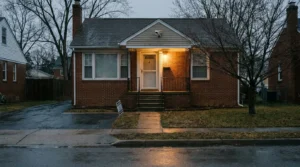
Not every structure counts as a dwelling for purposes of this charge. The offense generally applies to houses, condominiums, townhomes, apartments, and similar residences used or intended as living quarters. Where the structure is a detached garage, shed, building never used as living quarters, or commercial space, the charge may be legally inappropriate and subject to challenge. Whether an attached or connected structure qualifies is fact-specific.
This distinction matters enormously at sentencing. Burglary of a structure that is not a dwelling is charged under 720 ILCS 5/19-1 and is generally a Class 2 felony, with Class 3 classification in limited circumstances, while burglary of a dwelling is prosecuted as residential burglary at the Class 1 level. That difference in exposure is why defense counsel frequently focuses early attention on whether the location truly satisfies the statutory definition.
Residential Burglary Illinois Sentencing Under the Unified Code of Corrections
Because the offense is a Class 1 felony, the sentencing range is set by statute. Under 730 ILCS 5/5-4.5-30(a), the sentence for a Class 1 felony, other than second degree murder, is a determinate term of not less than 4 years and not more than 15 years, followed by mandatory supervised release. Conviction generally results in a term in the Illinois Department of Corrections rather than county jail.
Extended-term exposure can roughly double that range. An extended term Class 1 felony carries 15 to 30 years. Under Illinois aggravation rules at 730 ILCS 5/5-5-3.2(b), extended-term eligibility commonly arises where a defendant has a qualifying prior felony conviction of the same or greater class arising from a separate prosecution and committed within ten years, excluding time in custody.
| Offense | Classification | General Sentencing Range |
|---|---|---|
| Residential burglary (720 ILCS 5/19-3) | Class 1 felony | 4 to 15 years |
| Residential burglary, extended term | Class 1 felony, extended | 15 to 30 years |
| Burglary of a non-dwelling (720 ILCS 5/19-1) | Class 2 felony, or Class 3 in limited statutory circumstances | Lower statutory ranges apply |
Financial consequences accompany the custodial sentence. Under 730 ILCS 5/5-4.5-30(e) and (f), fines may be imposed as provided in Section 5-4.5-50(b), and Section 5-5-6 governs restitution. These obligations are generally in addition to any term of imprisonment.
Why Probation Is Rarely a Realistic Outcome
Residential burglary is commonly described as non-probationable, reflecting real statutory limits. While 730 ILCS 5/5-4.5-30(d) permits probation or conditional discharge for Class 1 felonies for up to 4 years, Section 5-5-3(c)(2) separately excludes residential burglary from probation and conditional discharge, subject to narrow statutory exceptions such as certain qualifying treatment or trafficking-victim provisions. Most defendants convicted of this offense face mandatory prison time.
Prior supervision status can eliminate probation entirely. No offender is eligible for probation or conditional discharge for a Class 1 felony committed while serving probation or conditional discharge for a felony. For clients already under supervision, that rule significantly increases prison exposure. Anyone unsure how a pending felony charge Illinois prosecution typically proceeds should review how these cases are handled before making decisions.
💡 Pro Tip: If you were on probation when the new offense allegedly occurred, tell your attorney immediately. That single fact can change plea negotiations and sentencing posture more than almost any other detail in the file.
The Legislative History Behind the Class 1 Classification
The Class 1 designation is long-standing. Residential burglary has been classified as a Class 1 felony since the offense was created in the 1980s. The current sentencing article of the Unified Code of Corrections was later reorganized by public act, with the residential burglary statute carrying source notes referencing subsequent amendments, including P.A. 96-1113 and P.A. 97-1108.
That history matters for defense strategy. Because the classification has been stable for decades, arguments for more lenient treatment generally must come through charge negotiation, factual challenges, or sentencing mitigation rather than through disputes about the statute’s meaning.
Common Defense Approaches in Residential Burglary Illinois Sentencing Cases
Defense strategy typically begins long before any sentencing hearing. The strongest opportunities often arise from pretrial motions and factual investigation. Approaches that may apply include:
- Challenging the sufficiency of evidence establishing intent at the time of entry
- Contesting identification, particularly where the case rests on brief observation or forensic inference
- Moving to suppress evidence obtained through unlawful search, seizure, or interrogation
- Disputing whether the structure legally qualifies as a dwelling place of another
- Establishing authority or consent to enter, which may negate a core statutory element
No approach guarantees any particular result. Whether a motion succeeds depends on the record, controlling appellate authority, and specific procedural posture.
Collateral Consequences Extend Well Past Release
A Class 1 felony conviction follows a person long after any sentence is served. Burglary conviction consequences may include housing barriers, professional licensing complications, potential immigration consequences for non-citizens, and loss of firearm rights, since Illinois and federal law generally prohibit firearm possession by convicted felons. Residential burglary convictions are generally not eligible for expungement in Illinois, though they may be eligible for petition-based sealing under 20 ILCS 2630/5.2, subject to a waiting period and other eligibility requirements.
Because the stakes reach beyond incarceration, early representation matters. Working with a residential burglary Illinois sentencing lawyer at the investigative stage may help preserve suppression issues and open avenues to reduce or reclassify charges before they harden.
💡 Pro Tip: Do not discuss the allegations with anyone other than your attorney, including family members over recorded jail calls. Statements made casually are routinely introduced as evidence of intent.
Frequently Asked Questions
1. Is residential burglary always a Class 1 felony in Illinois?
Under 720 ILCS 5/19-3(b), residential burglary is classified as a Class 1 felony. Whether the charge properly applies to given facts is a separate question, and where the structure is not a dwelling, a different and lesser classification may be appropriate.
2. Can someone convicted of residential burglary receive probation?
Generally, no. Residential burglary is excluded from probation under 730 ILCS 5/5-5-3(c)(2), subject to narrow statutory exceptions, and a defendant already serving felony probation is separately ineligible for probation on a new Class 1 offense.
3. What is the actual prison range for a conviction?
The general determinate range is 4 to 15 years under 730 ILCS 5/5-4.5-30(a), followed by mandatory supervised release. Where extended-term factors apply, exposure can rise to 15 to 30 years.
4. Does the prosecution have to prove something was stolen?
No. The State must prove intent to commit a felony or theft at the time of unauthorized entry or remaining, not that the intended offense was completed.
5. How does residential burglary differ from ordinary burglary?
Location is the controlling factor. Residential burglary applies to dwelling places such as houses, condominiums, and townhomes, while burglary of other structures may be charged under 720 ILCS 5/19-1, typically as a Class 2 felony.
What This Classification Means for Your Defense
Residential burglary occupies a demanding place in Illinois felony classification because the statute protects the home, and the legislature attached Class 1 consequences to that protection. The result is a charge that generally carries 4 to 15 years in the Illinois Department of Corrections, extended-term exposure potentially reaching 30 years in qualifying cases, mandatory supervised release, possible restitution and fines, and limited access to probation. None of that means a conviction is inevitable. Every element, from unauthorized entry to intent to the dwelling status of the structure, must be proven beyond a reasonable doubt.
If you are under investigation or already charged, the decisions made in the first weeks often shape everything that follows. Leonard Trial Lawyers are genuine trial attorneys who prepare every matter for a courtroom, not just a negotiation table. Call 312-380-6559 or request your free consultation to discuss your situation with counsel who takes these cases seriously.
Disclaimer: This content is for informational purposes only and is not legal advice. Every case is unique, and results may vary. Consult an attorney about your specific circumstances.